Explore seven influential books that challenged established norms and power structures in their time. These works offer profound insights into societal control, human consciousness, and the mechanisms that shape our reality. Prepare to uncover ideas that were once suppressed, revealing why they remain vital for understanding the world today.
1. 1984

1984 — George Orwell
This novel explains the psychological mechanisms behind surveillance states, particularly the concept of ‘doublethink’—the ability of a government to make you hold two contradictory beliefs simultaneously and accept both as true. Understanding how language control leads to thought control is crucial for protecting your mental autonomy in a world where certain words disappear from public discourse each year.
Who it’s for. It is written for anyone working in media, education, politics, or who regularly scrolls social media.
What to do with it. Defend your mind by recognizing when your language is being quietly rewritten around you.
2. The Doors of Perception

The Doors of Perception — Aldous Huxley
Huxley argued that the brain acts as a filter, not a generator, of consciousness, deliberately blocking access to a much vaster reality than our ordinary minds perceive. Your reality is curated by systems that benefit from you seeing less, making it essential to ask what you are not being allowed to see.
Who it’s for. This book is for anyone who feels mentally caged, creatively blocked, or spiritually hollow despite conforming to societal expectations.
What to do with it. Question the filters—cultural, educational, pharmaceutical—placed over your perception.
3. The Prince

The Prince — Niccolò Machiavelli
This masterpiece exposes that rulers throughout history have never operated by the moral rules they publicly preach, revealing that power has always had a private instruction manual. The gap between actions and words is where real leverage lives, and recognizing this gap prevents manipulation through idealistic language.
Who it’s for. It is essential reading for anyone who has ever been outmaneuvered, betrayed, or blindsided in business, relationships, or institutions.
What to do with it. Study what powerful people do, not what they say.
4. The Kybalion

The Kybalion — Three Initiates
This book decodes the philosophical teachings of Hermes Trismegistus, claiming the universe operates through seven precise mental laws, and mastering them transforms what you create. The Principle of Vibration teaches that your dominant mental state broadcasts a frequency that actively shapes your external circumstances, making inner change paramount.
Who it’s for. It is for anyone stuck in victimhood, chronic bad luck, or cycles they cannot explain rationally.
What to do with it. Change the inner state before expecting the outer world to shift at all.
5. The Communist Manifesto

The Communist Manifesto — Karl Marx and Friedrich Engels
The book’s analysis reveals that every society organizes itself around whoever controls the means of production, with all laws, moral codes, and cultural values following that economic structure. This single question dismantles more propaganda than any political party ever will, offering a clear lens through which to view societal structures.
Who it’s for. Understanding its analytical framework is critical for anyone trying to make sense of inequality, media bias, or institutional behavior.
What to do with it. Always ask who economically benefits from the current social arrangement before accepting any cultural narrative as natural or inevitable.
6. Lady Chatterley’s Lover

Lady Chatterley’s Lover — D.H. Lawrence
Lawrence argued that authentic human connection, including physical intimacy, is ruthlessly suppressed by class systems that require people to be emotionally isolated and economically dependent. Your emotional and physical aliveness is not a moral problem, but a political threat to systems requiring your docility.
Who it’s for. This book is for anyone who has ever felt their deepest desires shamed, disciplined, or pathologized by culture, religion, or class expectation.
What to do with it. Reconnecting to genuine desire, even imperfectly, is one of the most subversive acts available to an ordinary person.
7. Manufacturing Consent
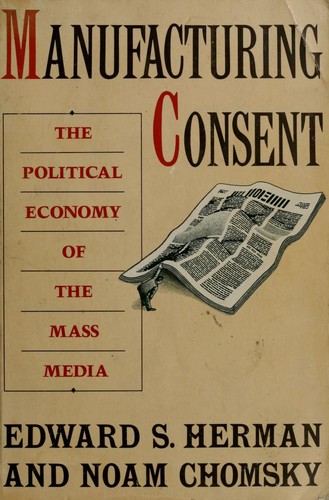
Manufacturing Consent — Noam Chomsky and Edward Herman
This work demonstrates that democratic free-press societies manufacture public opinion as efficiently as any dictatorship through ownership, advertising dependency, sourcing, and strategic silence. Once you see which sources are structurally rewarded and which are systematically ignored, the invisible architecture of your entire worldview becomes brutally, irreversibly visible.
Who it’s for. It is essential for every human being alive in the information age, especially those who believe they are too smart to be manipulated.
What to do with it. Map the five filters of the propaganda model onto every news story you consume.
Full page on “Manufacturing Consent”: who it’s for and when to read it
Not sure what order to read them in? Get The 1% Reading Path: 20 books in the exact order to read them, free PDF.