Discover seven books that billionaires recommend for building wealth and personal mastery. These titles offer timeless wisdom on finance, relationships, self-improvement, and strategy, providing a roadmap to financial and personal freedom. Each book is presented with its core idea, target audience, and a practical takeaway.
1. The Richest Man in Babylon

The Richest Man in Babylon — George S. Clason
Wealth is a skill, not a circumstance, and the key to building it is consistent saving. The book emphasizes the principle of ‘pay yourself first,’ advocating for setting aside a portion of your income before any other expenses. This book delivers the brutal truth that saving consistently, even a small amount, is the foundation of wealth, regardless of income level.
Who it’s for. Anyone living paycheck to paycheck who believes they will start saving only when they earn more.
What to do with it. Automate ten percent of every paycheck into a separate account starting today.
2. Rich Dad Poor Dad

Rich Dad Poor Dad — Robert T. Kiyosaki
This book challenges the conventional middle-class advice of simply getting a job and buying a house. It highlights the importance of financial literacy and understanding the difference between assets (which put money in your pocket) and liabilities (which take money out). It destroys the misconception that a job is security and teaches you to identify and acquire assets that generate income, leading to true financial freedom.
Who it’s for. Every young professional who has bought a car on credit and mistakenly considers it an investment.
What to do with it. List everything you own and label each item as generating income or draining it.
Full page on “Rich Dad Poor Dad”: who it’s for and when to read it
3. The Intelligent Investor

The Intelligent Investor — Benjamin Graham
The market is not a casino; it’s a voting machine short-term and a weighing machine long-term. Emotion is the enemy of every investor, and one should exploit the market’s irrationality rather than mirroring its panic or greed, viewing the market as an emotional ‘Mr. Market’. Warren Buffett called this ‘the best book about investing ever written’ because it provides a timeless framework for rational investing, protecting against get-rich-quick schemes and emotional decisions.
Who it’s for. Anyone who has sold stocks during a market crash and bought at the peak.
What to do with it. Invest on a scheduled basis, never based on emotion.
4. How to Win Friends and Influence People

How to Win Friends and Influence People — Dale Carnegie
Building relationships is paramount, as money always follows relationships. The core idea is that people don’t just want to be understood; they want to feel understood, which can be achieved by listening with genuine curiosity. No billionaire built an empire alone. This book teaches essential interpersonal skills to make people feel valued, which is crucial for closing deals, negotiating raises, and forming partnerships.
Who it’s for. Every technically brilliant person who consistently gets passed over for promotion.
What to do with it. In your next conversation, ask one more question before offering your own opinion.
Full page on “How to Win Friends and Influence People”: who it’s for and when to read it
5. The 7 Habits of Highly Effective People
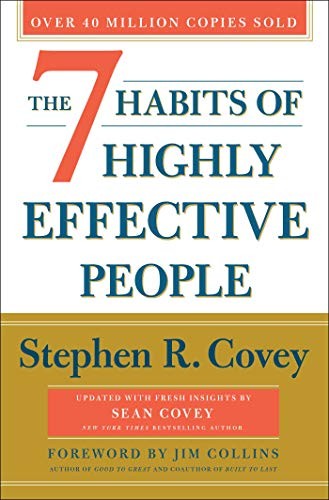
The 7 Habits of Highly Effective People — Stephen R. Covey
Lasting success comes from character, not just personality. Most people react to life instead of designing it. The most powerful habit is ‘Begin With the End in Mind,’ meaning every decision and habit should align with a clear vision of who you want to become. While other books teach influencing others, this one focuses on mastering oneself first, addressing the root cause of failure by encouraging proactive life design rather than reactive living.
Who it’s for. Anyone who is busy all day but still feels like nothing meaningful is getting done.
What to do with it. Write one sentence describing the person you want to be in ten years, and let every choice answer to that sentence.
6. A Random Walk Down Wall Street

A Random Walk Down Wall Street — Burton G. Malkiel
This book debunks the myth of ‘secret strategies’ in investing, proving with decades of data that low-cost index funds consistently outperform most active fund managers long-term. The market trends upward over decades, and the smartest strategy is to stay invested and avoid trying to be clever. It’s the antidote to finance gurus selling complex strategies, showing that simplicity and consistency through index funds are shockingly effective and beat almost every expert almost every time.
Who it’s for. Every person paying a financial advisor two percent annually to underperform the market.
What to do with it. Research one broad-market index fund today and compare its ten-year return to your current investment.
7. The Art of War
The Art of War — Sun Tzu
This is not a book about fighting, but a manual for strategic thinking. Its most devastating idea is that every battle is won or lost before it is fought, emphasizing that preparation, positioning, and information are infinitely more important than brute force. Billionaires use this 2,500-year-old text to understand competition, timing, and the psychology of winning, making it the most powerful book on the list for strategic advantage.
Who it’s for. Every entrepreneur who reacts to competitors instead of anticipating them.
What to do with it. Before your next major decision, ask ‘what does the other side want most?’ Answering this question can help you control the outcome.
Full page on “The Art of War”: who it’s for and when to read it
Not sure what order to read them in? Get The 1% Reading Path: 20 books in the exact order to read them, free PDF.