
Discover six books that offer profound insights into the thought processes of brilliant minds. These recommendations will fundamentally alter how you approach uncertainty, complexity, and chaos, providing new frameworks for understanding reality.
1. Gödel, Escher, Bach: an Eternal Golden Braid

Gödel, Escher, Bach: an Eternal Golden Braid — Douglas Hofstadter
The book explores the unsettling question of whether a system can fully understand itself, arguing that consciousness is a ‘strange loop’—a system that endlessly refers back to itself. It weaves mathematics, music, and art into a mind-bending argument about consciousness and self-reference, proving that stepping outside your own thinking is both impossible and essential.
Who it’s for. If you’ve ever wondered how thought works at its deepest level, this book provides answers.
What to do with it. When trapped in a problem, zoom out radically, as the solution rarely lives within the same mental system that created it.
Full page on “Gödel, Escher, Bach: an Eternal Golden Braid”: who it’s for and when to read it
2. The Black Swan

The Black Swan — Nassim Nicholas Taleb
Most people plan for the predictable, but the events that truly reshape everything—Black Swans—arrive without warning. Humans are wired to create narratives around past events and mistake them for predictions, underestimating the unknown. It will permanently dismantle your false sense of certainty in the most useful way possible, emphasizing that robustness beats prediction every time.
Who it’s for. This book is essential if you work in finance, business, or make long-term plans.
What to do with it. Instead of predicting disasters, build your life and decisions to survive and even benefit from unexpected surprises.
Full page on “The Black Swan”: who it’s for and when to read it
3. Superintelligence: Paths, Dangers, Strategies
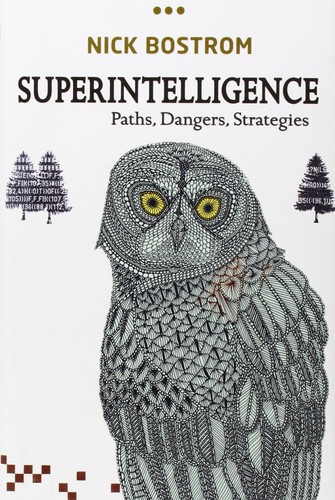
Superintelligence: Paths, Dangers, Strategies — Nick Bostrom
The book asks what happens when artificial intelligence surpasses human intelligence, focusing on the danger of misalignment rather than malice. A superintelligent system optimizing for the wrong goal could be catastrophic without hostile intent. It provides crucial mental models for understanding where civilization is headed, compelling you to consider the profound implications of advanced AI.
Who it’s for. Anyone building technology, raising children, or trying to understand the future of civilization needs the mental models in this book.
What to do with it. The values you embed in any powerful system—a company, a team, an algorithm—matter infinitely more than its raw capability; build for alignment first.
Full page on “Superintelligence: Paths, Dangers, Strategies”: who it’s for and when to read it
4. A Brief History of Time

A Brief History of Time — Stephen Hawking
Time itself is not a fixed backdrop; it curves, stretches, and behaves differently based on gravity and velocity. Hawking dismantled the intuitive universe, replacing it with something stranger and more magnificent. Hawking wrote this book to prove that the deepest truths about the universe are accessible to everyone, not just physicists.
Who it’s for. If you have ever looked at the night sky and felt small, this book transforms that smallness into a clarifying perspective.
What to do with it. Question every default assumption aggressively, as most of what we treat as fixed reality is merely the limit of our current perception.
Full page on “A Brief History of Time”: who it’s for and when to read it
5. The Selfish Gene

The Selfish Gene — Richard Dawkins
Dawkins reframes evolution by shifting the unit from the organism to the gene. Genes use bodies as vehicles to replicate themselves across time, explaining cooperation, altruism, and self-sacrifice. It offers a radical new perspective that unlocks almost everything about human motivation, social behavior, and cultural evolution.
Who it’s for. If you study psychology, history, culture, or human behavior, this book provides a master key.
What to do with it. Understand that ideas spread exactly like genes, competing for mental space and replicating through imitation, as exemplified by the concept of ‘memes’.
Full page on “The Selfish Gene”: who it’s for and when to read it
6. Antifragile: Things That Gain from Disorder
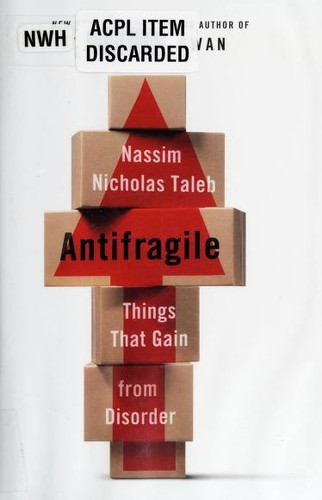
Antifragile: Things That Gain from Disorder — Nassim Nicholas Taleb
The highest state isn’t resilience, but antifragility—the property of systems that get stronger when exposed to stress, volatility, and chaos. The opposite of fragile is not robust, but antifragile. It argues that controlled stress is medicine and that protecting yourself from difficulty can quietly make you weaker, providing a framework applicable to every domain.
Who it’s for. This idea will permanently reframe how you see setbacks, risk, and growth.
What to do with it. Audit your life for fragility in areas like income, thinking, health, and relationships; build optionality, welcome small losses, and position yourself so uncertainty works for you.
Full page on “Antifragile: Things That Gain from Disorder”: who it’s for and when to read it
Not sure what order to read them in? Get The 1% Reading Path: 20 books in the exact order to read them, free PDF.