This collection of seven books is designed to transform your approach to thinking, arguing, predicting, and resisting influence. You will discover powerful frameworks to navigate a complex world, make better decisions, and understand the forces shaping your perceptions.
1. Thinking, Fast and Slow

Thinking, Fast and Slow — Daniel Kahneman
Your brain operates on two systems: System 1 is fast, emotional, and automatic, making most decisions without conscious input. System 2 is slow, deliberate, and rational but often lazy, revealing that you are not as rational as you believe. This pause alone can save you from making bad decisions driven by your automatic, emotional system.
Who it’s for. Anyone who has made financial decisions based on feeling, dismissed arguments due to appearance, or trusted instinct in high-stakes moments.
What to do with it. Before any major decision, force a ten-minute pause and ask yourself which system is driving you.
Full page on “Thinking, Fast and Slow”: who it’s for and when to read it
2. The Black Swan

The Black Swan — Nassim Nicholas Taleb
The most significant events in history are almost never predicted, yet after they occur, people create neat explanations for why they seemed obvious. These unpredictable, high-impact events are called Black Swans, and they shape your life, career, and worldview in ways your current models cannot foresee. Reducing fragility and keeping options open will prepare you for the unknown, which is not the enemy, but being unprepared for it is.
Who it’s for. Every person who builds five-year plans with spreadsheet precision, every investor who trusts a risk model, and every expert confident in their forecast.
What to do with it. Stop optimizing only for the probable; instead, design your life to survive and benefit from the improbable.
Full page on “The Black Swan”: who it’s for and when to read it
3. The Art of Being Right

The Art of Being Right — Arthur Schopenhauer
This book catalogs thirty-eight rhetorical strategies people use to win arguments, regardless of who holds the truth. Schopenhauer exposes every trick used against you, allowing you to recognize and dismantle them in real time. Naming a rhetorical trick instantly destroys its power and helps you maintain intellectual integrity in discussions.
Who it’s for. Anyone who consistently loses debates to factually wrong people, or has seen a bad idea succeed simply because it was delivered with confidence.
What to do with it. Learn the fallacies by name, and when someone uses a trick like shifting the burden of proof or attacking your character, name it aloud.
4. Influence
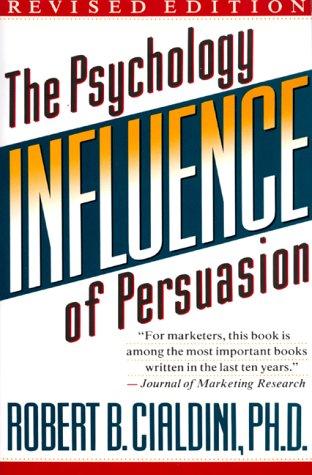
Influence — Robert Cialdini
Cialdini identified six universal weapons of influence: reciprocity, commitment, social proof, authority, liking, and scarcity. These are not theories but the invisible architecture behind every decision you believe you are making freely. Recognizing these principles breaks the spell of influence and restores your autonomy in decision-making.
Who it’s for. Everyone, especially those who believe they are too smart to be manipulated, as this belief makes manipulation effortless.
What to do with it. When you feel an inexplicable urgency to act—to buy, agree, or comply—pause and identify which of Cialdini’s six principles just fired.
5. On Liberty

On Liberty — John Stuart Mill
Mill argues that the only legitimate reason to restrict anyone’s freedom is to prevent harm to others. He also profoundly defends unpopular opinions, suggesting that a silenced view might be true, and even a false view, when argued, sharpens the truth against it. This practice builds intellectual courage, a crucial skill for navigating diverse viewpoints and strengthening your own convictions.
Who it’s for. Anyone who has blocked a voice they disagreed with, calling it safety, or nodded along with a crowd to avoid social friction.
What to do with it. Actively seek out the strongest version of the argument you most oppose; if you can’t steelman it, you don’t understand your own position yet.
6. Superforecasting

Superforecasting — Philip E. Tetlock and Dan Gardner
Most expert predictions barely outperform random chance, but a small group of ‘superforecasters’ consistently beat everyone. Their success comes not from intelligence but from a specific mental process: updating beliefs with new evidence, thinking in probabilities, and treating every forecast as a falsifiable experiment. This habit forces honesty, reduces overconfidence, and measurably improves your understanding of uncertainty over time.
Who it’s for. Anyone whose job, investments, or relationships depend on predicting what comes next, which is everyone.
What to do with it. Start assigning numerical probabilities to your beliefs, such as ‘I estimate a sixty-five percent chance this works,’ instead of vague statements.
7. The Demon-Haunted World

The Demon-Haunted World — Carl Sagan
Science is not merely a collection of facts but a method for avoiding self-deception. Sagan provides a ‘Baloney Detection Kit,’ a set of tools for identifying bad reasoning, pseudoscience, and deliberate deception in an information-saturated world. Applying these questions will make you functionally immune to an entire class of manipulation and help you discern truth from falsehood.
Who it’s for. Every person navigating an information environment designed to confuse them, which today means every person alive.
What to do with it. Memorize Sagan’s core questions, such as whether a claim relies on anecdote instead of evidence or resists disproof by design, and apply them to headlines, social media, and your own beliefs.
Not sure what order to read them in? Get The 1% Reading Path: 20 books in the exact order to read them, free PDF.