
Many influential books are often cited but rarely read in their entirety. This analysis delves into ten such works, revealing their core ideas and the profound ways they can reshape your perspective on time, wealth, consciousness, and personal identity. Discover which of these challenging reads could unlock new ways of thinking and living for you.
1. A Brief History of Time

A Brief History of Time — Stephen Hawking
Time itself had a beginning. Understanding this reframes every assumption you hold about permanence, progress, and your own urgency. It offers a transformative understanding of time’s finite nature, challenging fundamental beliefs about existence.
Who it’s for. If you feel like time is infinite, this book will cure that illusion permanently.
What to do with it. Hawking teaches you that time has edges.
Full page on “A Brief History of Time”: who it’s for and when to read it
2. Capital in the Twenty-First Century

Capital in the Twenty-First Century — Thomas Piketty
Wealth grows faster than wages—always. If you work for money instead of owning assets, you are mathematically falling behind. It explains every economic conflict happening right now by revealing the arithmetic behind wealth accumulation.
Who it’s for. Anyone seeking to understand the fundamental dynamics of economic inequality.
What to do with it. Piketty shows you the math of wealth.
3. Thinking, Fast and Slow

Thinking, Fast and Slow — Daniel Kahneman
Every decision you believe is rational is partly a shortcut your brain invented. Knowing which shortcut is running saves you from the worst choices of your life. It helps you understand the biases in your own thinking, preventing poor choices and fostering self-awareness.
Who it’s for. Anyone who wants to make better decisions and distrust their own mind in a productive way.
What to do with it. Kahneman exposes the shortcuts your brain uses against you.
Full page on “Thinking, Fast and Slow”: who it’s for and when to read it
4. Ulysses
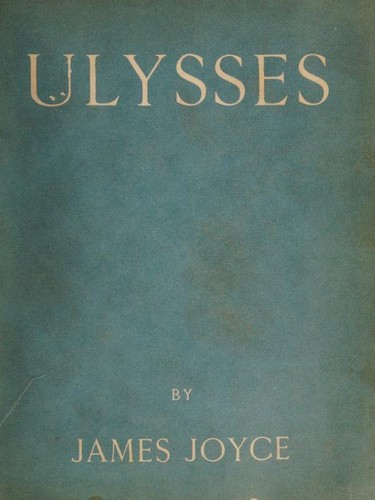
Ulysses — James Joyce
Consciousness is not linear, and anyone who tells you their thinking is orderly is lying to you and to themselves. Joyce compressed an entire human day—every thought, desire, embarrassment, and epiphany—into one novel. It offers a profound insight into the non-linear and complex nature of human thought and experience.
Who it’s for. Non-readers who want to understand the true nature of consciousness.
What to do with it. Joyce proves consciousness is not what you think it is.
5. Infinite Jest

Infinite Jest — David Foster Wallace
Entertainment is the most effective form of control ever invented. The people who finish this book do not consume media the same way afterward. It fundamentally alters how readers perceive and interact with entertainment and media.
Who it’s for. Those who want to critically examine their media consumption habits.
What to do with it. Wallace shows you how entertainment controls attention.
6. War and Peace

War and Peace — Leo Tolstoy
History is not made by great leaders but by millions of invisible ordinary decisions accumulating. Your choices compound. Every single one of them. It offers a transformative perspective on history, emphasizing the cumulative power of individual decisions.
Who it’s for. Anyone seeking to understand the true forces shaping history and the impact of individual actions.
What to do with it. Tolstoy reminds you that history is made by ordinary choices.
7. Moby-Dick

Moby-Dick — Herman Melville
Singular obsession destroys and creates in equal measure. The question is what your white whale is, and whether it is worth the wreck. It provides a powerful exploration of the dual nature of obsession, both its destructive and creative potential.
Who it’s for. Individuals grappling with their own intense pursuits and ambitions.
What to do with it. Melville warns you what obsession costs.
8. Gödel, Escher, Bach

Gödel, Escher, Bach — Douglas Hofstadter
Any sufficiently complex system contains truths it cannot prove from within itself. Applied to your life: the beliefs limiting you most are the ones you cannot yet see, because you are inside them. It makes readers feel genuinely afraid of their own intelligence, revealing the inherent limitations of internal systems of belief.
Who it’s for. Anyone who wants to understand their own intellectual blind spots and limitations.
What to do with it. Hofstadter proves your blind spots are structural and unavoidable without outside perspective.
Full page on “Gödel, Escher, Bach”: who it’s for and when to read it
9. Capital

Capital — Karl Marx
Labor creates value, but the system is structured so that labor rarely captures it. Understanding this argument explains every economic conflict happening right now. It provides a foundational understanding of economic structures and conflicts, whether one agrees with its premise or not.
Who it’s for. Anyone seeking to understand the root causes of economic conflicts and the dynamics of power.
What to do with it. Marx gives you the vocabulary to understand power.
10. In Search of Lost Time

In Search of Lost Time — Marcel Proust
Memory is not a recording, it is a reconstruction. Every time you remember something, you are rewriting it. Your identity—everything you believe you are—is a story you are actively editing in real time. It offers profound freedom by revealing that identity is not fixed and the past is always open to reinterpretation.
Who it’s for. People who want to stop being prisoners of their own past and understand the fluidity of self.
What to do with it. Proust gives you the single most useful tool a human being can carry: the understanding that who you are is not fixed, and that the story you tell about yourself is always within your power to rewrite.
Not sure what order to read them in? Get The 1% Reading Path: 20 books in the exact order to read them, free PDF.
Other lists with these same books
- 10 Books That Will Make You Smarter Than 99% of People
- 6 Books That Reveal How Geniuses Think
- 7 Books That Explain The Human Mind
- 5 Psychology Books You Actually Need (Skip the Rest)
- They Burned These 7 Books. Here’s What They Were Afraid Of
- 10 History Books to Read If You Want to Be Disgustingly Educated